Thursday, February 28, 2013

How to Make Quilt Templates :: Great Info for Quilters

How to Make Quilt Templates
By Jesse T Anastasio

Templates are patterns, so to speak, only with templates you cut the materials you need from strong fabrics. Otherwise, if you are making patterns you would cut the templates from ordinary paper.

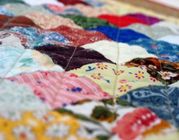
By creating templates, you are making your quilt-making process easier. The surface patterns will flow consistently as well. You can use your created templates and trace along your patterns, instead of pinning graph paper to your quilt material. You can purchase ready-made templates, however you will save money if you create your own. You can purchase transparent plastics at craft stores or stores that carry quilting supplies. If you choose plastic, you will need to individually trace your patterns. You will need allowance for your seams. After you create your patterns, cut your templates. The plastic templates are ideal for making larger quilts.

Straight grains make up woven textiles. The grain lines run comparably parallel along the edges of the non-fraying edges in the materials. Across the straight grain is another line known as the 'cross grain.' Quilters use these terms to define the lines. You will need to eliminate the edges by cutting them off.

How to create basic templates

Creating templates is as simple as tracing your footprint on a piece of paper. First you need to decide on a design. There is a variety to choose from, especially when you look to computer programs or the internet for inspiration.

To create your templates you will need to choose plastic or paper. Once you make your choice you will need to trace your template to paper, add a few permitted seams, and then use adhesive to add your trace to a clip of hard copy like cardboard and cut out your templates. Before you cut your templates, first make copies and play with the patterns until you achieve your desired pattern. Once you achieve your patterns add numbers or letters to mark it. This will help you remember where each template goes. Next, you will cut your pattern parts out, using scissors or a hobby knife. Cut the outside areas only at the edges. You will need to create one template per piece to add to your quilt.

Next, trace your patterns, tracing the parts onto your plastic or paper. Space the parts one inch in all directions, and away from the others. Use a measuring device, such as a ruler to draw one-inch lines around the outer outline. On your templates, create a dot. You want the dots to meet two seams per count. The dots are important to mark your stitching areas.

Next, use your direction of textile thread lines (grain line) and convey the arrows you have created from your model parts and relocate it to your template. You have now made basic templates!

In addition to the basic templates, you can make window templates. The templates are ideal for those want to pierce by hand. You can also make templates for pre-prepared designs. Window templates can assist the beginners, since you will have a marked line to follow through when you begin stitching. The windows are easy to make, yet you must follow the hand piercing: rules to complete your patterns. You can also add templates to your window, which may include emblems such as roses, bouquets, etc. Regardless the window, basic, or other types of templates can lead up to a block/border pattern, rather a fashionable quilt.

Visit http://www.funandfreecrafts.com for more great, free craft ideas from fellow crafter and writer Jesse Anastasio.

Friday, February 15, 2013

4 Quick and Easy Preschool Craft Ideas

Are you a preschool teacher or a home schooling mom? Looking for some quick and easy preschool craft project ideas? If so, we have 4 great craft project ideas for you today that are all geared towards young kids! You will need to supervise the young ones while they do these projects!

1. Photo Lacing Craft Project

* Old poster board, cardboard, empty cereal boxes, etc.
* 1/4" or 1/2" round hole puncher
* scraps of yarn

We typically cut out shapes from empty cereal boxes but you can use cardboard or poster board too! Use a hole punch and punch holes in the shape that you cut out from cardboard. Give your child a few scraps of yarn (cut no longer than 12" in length) and teach them how to lace the yarn through the holes to make pretty designs.

2. Deck of Cards Streamer/Swag

* Old deck of flash cards or playing cards
 * 1/4" hole puncher
 * 1/4" to 1/2" wide by 2 foot long satin ribbon
* Scrapbooking glue dots or bottle of craft glue

Show your toddler how to punch one hole in each long side of the flash cards. Thread the satin ribbon through the holes on the flash cards to make a streamer (swag). To keep the flash cards from sliding around, take the back of each card to the satin ribbon using a glue dot or a dab of craft glue. Let dry. Tie loops at each end so the swag can be hung up in your child's room or simply tack it up with thumb tacks.

3. Flash Card Refrigerator Magnets

* Old deck of flash cards
* 2 to 3 adhesive magnetic sheets (found at office supply stores)

Trace around each flash card on the adhesive magnetic sheets. Remove the adhesive backing and attach the backing to the flash card with the magnetic side facing out. Trim magnet sheet if needed with child safety scissors. They are ready to use (play with) immediately.

4. Board Puzzle Refrigerator Magnets

* Board Puzzle (up to 24 large pieces)
* Round Magnets
* Bottle of Craft Glue

You can find board puzzles at any toy store or even at the dollar store. Discard the board. Use craft glue to glue a magnet onto the back of each puzzle piece, making sure that the magnet is in the center of the puzzle piece. Let pieces dry. Your child can now build their new puzzle on the front of the refrigerator. Great way to keep them entertained while you are working around in the kitchen.

Friday, February 1, 2013

DIY Valentine's Day Cards from Martha Stewart's Crafts


Looking for some quick & easy Valentine's Day homemade greeting card ideas? Well, check out these ideas that were sent over to us from Martha Stewart Crafts! I love that these are quick, simple and easy ideas, you could whip up several of them in just one afternoon! Thanks Martha! (see below for the ideas).

When it comes to Valentine’s Day, a homemade card is sweeter than fancy chocolates and more personal than blooming roses. And with Martha Stewart Crafts, unleashing your inner cupid is as easy as 1-2-3:

1. To express your heart’s desire, start with the utterly charming Martha Stewart Crafts “Stamp Card and Envelope Set” – it includes 18 scalloped edge note cards and matching envelopes with heart-accented labels so you can share your love with everyone you wish.

2. Add your personal stamp with the “Wood Stamp Valentine’s Day Hearts” set of 12 mini stamps nestled in a reusable wood crate.

3. Seal with a kiss…and with “Valentine Cupid” and “Valentine Cupcake” stickers. Yummy confections, cherub silhouettes, hearts and more Valentine icons shine with glitter and foil accents.

To make things even sweeter, you can save 20% at MarthaStewartCrafts.com now through Valentine’s Day (February 14th, 2013). Just enter coupon code BLOG20 at checkout.